


The one thing that always comforts fans on their way home from a campaign-ending loss is the thought of the near future. “There’s always next season,” they tell themselves and lo –and-behold they’re right. Within a few days, or at most a few short weeks, a promising coach is appointed or a shiny new foreign player arrives, a veteran star renews his contract and suddenly the air is filled with the comforting scent of renewal.
But with national team basketball, it’s different. Considering Israel’s non-existent history in the FIBA World Cup, “next season” will only arrive in four years, when EuroBasket lands in Athens, Madrid, Ljubljana and Tallinn. That’s a long, long time, time in which so much can happen and change.
Here’s an inside note: these words are being written on a Monday morning, after way too little sleep. Previous columns during the campaign after both wins and losses, landed on editor Moshe Halickman’s desk (a fancy way of saying a Word file sent via WhatsApp) in the late hours of the night, not long after the games ended.

Deni Avdija and Giannis Antetokounmpo – Photo Credit: FIBA
Because when it comes to national teams, we’re all ultimately fans.
When Deni Avdija’s final three-pointer swished through the net and set the final score, 84-79 for Greece it brought with it an emptiness that only endings can bring.
That emptiness isn’t about surprise or disappointment over failure, far from it. Because this wasn’t a failure. Israel got exactly where it was supposed to. No more, but also no less. It was fun, at times it was emotional and continuing the theme from the tournament preview article (“Moments”), we got a moment worthy of the highlight reels.
Despite returning to the Round of 16 for the first time in a decade, we didn’t really break the glass ceilings we hoped to shatter. The golden age of the youth national team which began with the surprise run to the 2017 final and peaked with the back-to-back wins in 2018 and 2019 was supposed to pay off in this tournament. 2022 came too early, with rising stars (Avdija, Yam Madar, Yovel Zoosman, Tamir Blatt) perhaps not yet ready to lead on the big stage. We told ourselves that 2025 would be the true opportunity for Israeli basketball’s big exit. And now we’re fairly certain, somewhat justifiably, that this was just a preview for 2029.
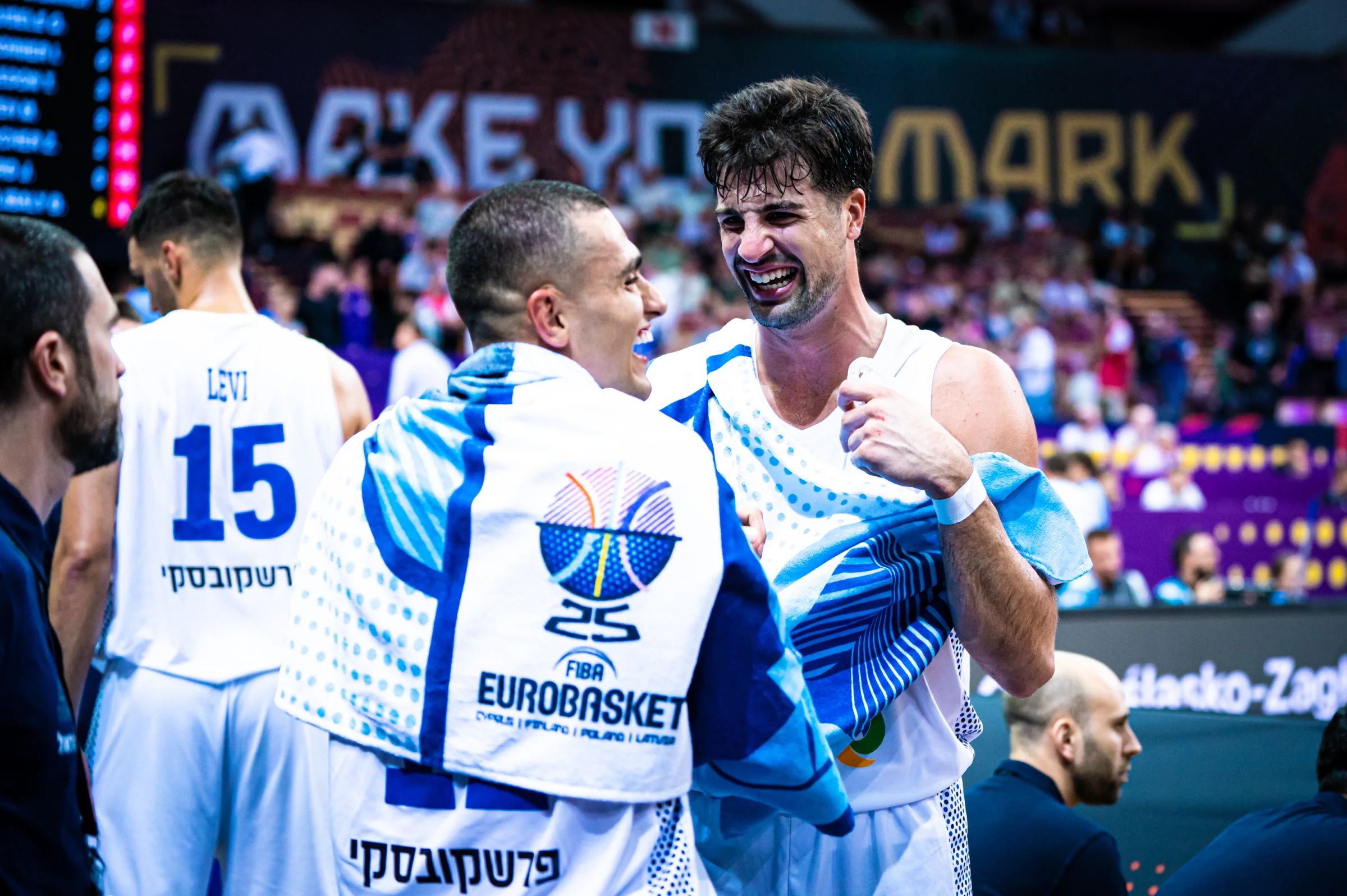
Yam Madar and Deni Avdija – Photo Credit: FIBA
The conditions weren’t fully ripe. Avdija was great; huge, tremendous, but a bit lonely at the top. Madar has his mitigating circumstances, limited by injury. And there’s little doubt that had Ben Saraf and/or Danny Wolf been in Katowice, the team would’ve stayed at least two more days in Riga and the stars of the 2003 campaign would’ve been giving nostalgic interviews this morning, praising their worthy successors.
But that’s life. Almost every team has its own limitations preventing it from arriving at a tournament in ideal, utopian shape. The question is how you overcome those limitations. And here, it must be said, Israel boxed itself in and failed to present creative basketball solutions.
Coach Ariel Beit Halachmi opted early for a strategy of tall lineups but didn’t reap the benefits that strategy might have offered. Take Zoosman, for example. His career so far has been split in two: when Ioannis Sfairopoulos used him as a 3&D guy waiting in the corner for passes that rarely came from Scottie Wilbekin, he was withered and stagnated.
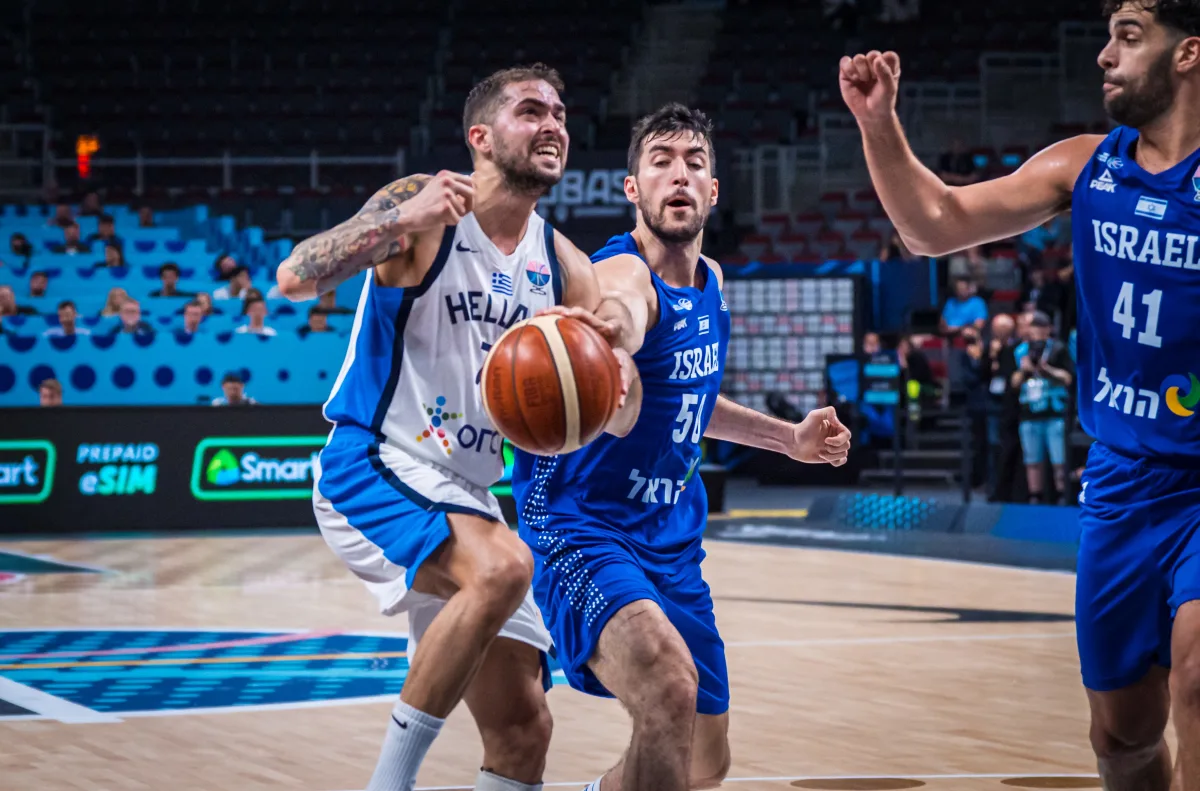
Yovel Zoosman – Photo Credit: FIBA
But when Yonatan Alon and Oded Katash used him more like a point forward and creator, he flourished. This national team version brought a third category: Zoosman was slotted in as a shooting guard and to put it mildly, he couldn’t find his rhythm. The stats tell the story and not even the cliché of “things that don’t show up in the box score” can hide it.
The questions that need to be asked today, in light of the bottom line, are nearly self-evident. If Eitan Burg and Rafi Menco played a combined 43 minutes across six games, why was it so urgent to go into the tournament without a single true backup point guard? (No, Bar Timor is not a point guard.) And if Roman Sorkin, who had an excellent tournament individually and is one of the most versatile offensive power forwards in the EuroLeague, why was he used exclusively as a center? Sure, there were moments when his mobility was a major advantage but against higher-level opponents, his weaknesses at that position became evident.

Ariel Beit Halachmi – Photo credit: FIBA
At the end of the day, this was a team built around a quartet. Under the circumstances, Avdija, Madar, Sorkin and captain-in-every-sense Tomer Ginat all did their part in every aspect and they deserve full praise and recognition. They’ll likely be there in the next tournament, but to be among Europe’s top eight teams, you need stronger, broader and more reliable supporting firepower. The bench ended up being too short and the role players didn’t fulfill their roles, didn’t contribute enough and didn’t show enough confidence.
And for that, there’s always the next season. Somewhere off in 2029.
********
Writers, journalists, and analysts are not the story. Our role is only to convey it to the reader. But since I began this with a personal tone, I’ll break from tradition and finish on the same note.
After a two-and-a-half-month break that included some professional changes (details soon), I returned during this EuroBasket to do what I love most, in two simple words: write basketball. Thanks to Sports Rabbi and the Halickman family for the platform. It was an honor to contribute to this esteemed outlet.

0 Comments