


Hapoel Tel Aviv’s tremendous victory over Panathinaikos on Friday night brought back memories of another era back to the 2024/25 season, when it was still acceptable to call Dimitrios Itoudis’ team a Cinderella story (while also describing it as a Galacticos-style squad). The era of Marcus Foster, Yam Madar and Jonathan Motley. The EuroCup days.
All of that is gone now and it does not look like it will return. But this EuroLeague double week, capped by a spectacular performance at OAKA, reminded me of one of the defining characteristics of the period when the Red Devils were at peace with their fans: the feeling, backed up by the statistics, that the Greek coach is once again becoming increasingly comfortable with his rotation.
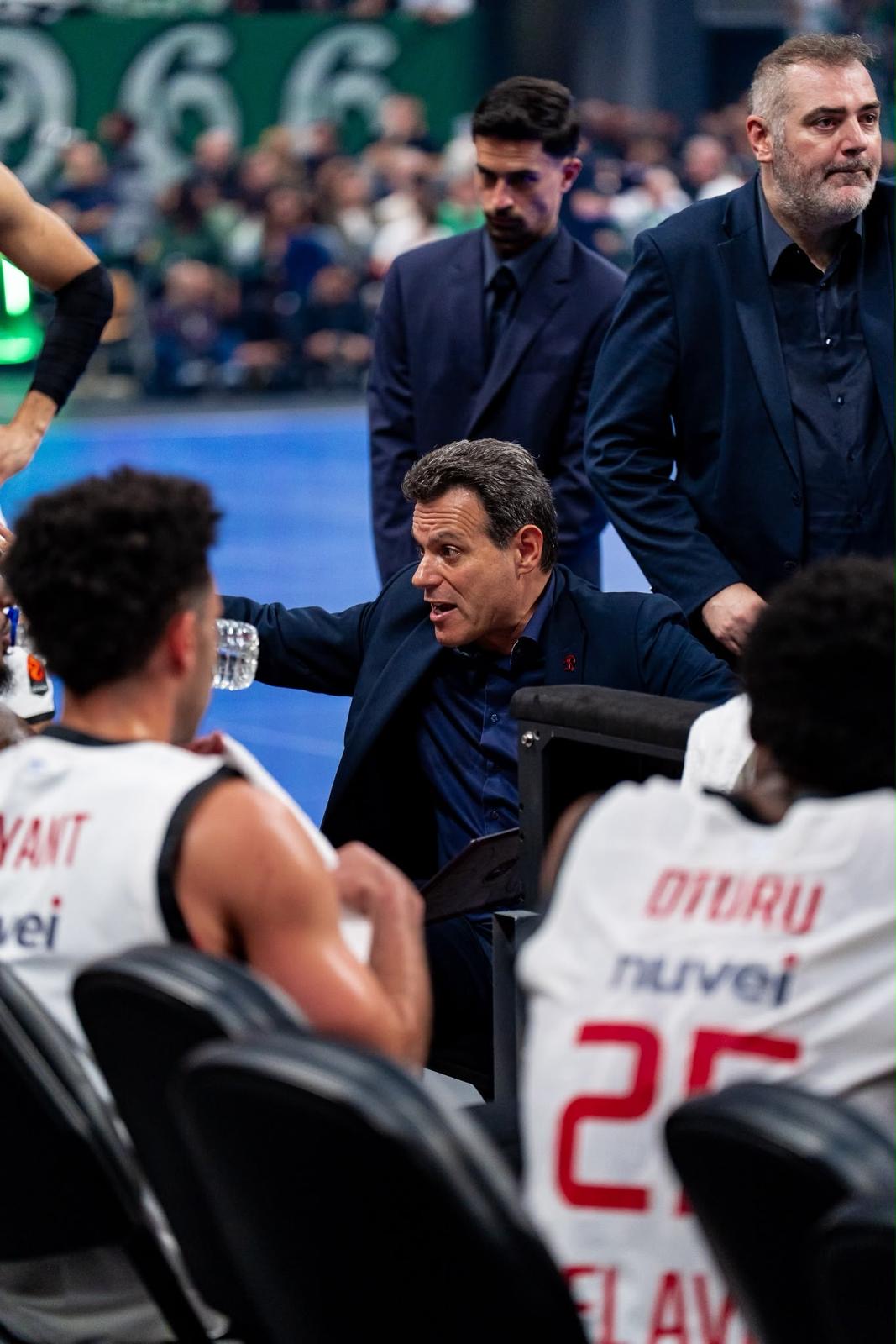
One of the things I remember most vividly as an ordinary fan watching Hapoel Tel Aviv’s historic 2024/25 EuroCup campaign was how Itoudis was never afraid to throw his entire arsenal onto the floor during the first half, get a feel for his deep roster and then select a shorter rotation to put the game away in the second half.
That luxury helped Hapoel win its series against Valencia, when Bruno Caboclo and Foster came off the bench to combine for the game-winning basket and in many ways, secure the club’s coveted ticket to the EuroLeague.
Credit: Hapoel “IBI” Tel Aviv
Last season, however, we saw the opposite in Europe’s premier competition. Itoudis increasingly relied on his new starting lineup, gradually shrinking his rotation as the season progressed. By the series against Real Madrid, injuries to Elijah Bryant and Antonio Blakeney had left the Tel Aviv side with virtually no chance of upsetting Los Blancos. It was not that the roster lacked depth; rather, the Greek coach rarely used more than 8.5 players, effectively sidelining Madar, Motley, Tomer Ginat and others in favor of giving Vasilije Micic, Bryant and Dan Oturu more and more minutes.
This season, Hapoel’s EuroLeague roster can also be divided into two tiers based on playing time: the core rotation (Bryant, Micic, Blakeney, Tomas Satoransky, Oturu and Zach LeDay) and the supporting cast (Amir Coffey, Ish Wainright, Jacob Toppin, Tai Odiasie, Eugene German and Caboclo).
Through six games, the six mainstays in Hapoel’s rotation have accounted for 73% of the team’s total playing time. That is a significant share and it did not shift in favor of the supporting cast in the win at OAKA, either.
So why do I still believe Itoudis is beginning to get more out of his rotation?
The secret lies in the adjustments made by the sharply dressed Greek coach, who once again threw nearly his entire arsenal onto the floor, using all 12 players during the first half before bringing back the right personnel for crunch time. Those decisions helped him hand Zeljko Obradovic his first loss of the season.
First, it is important to highlight Amir Coffey. He looks increasingly likely to become a fixture in Itoudis’ rotation, which makes him an important part of my argument. Coffey brings defensive toughness, relatively reliable shooting and the ability to get out in transition after a defensive rebound or a turnover, as he did alongside Odiasie late in the first half. Coffey was excellent against the Turkish opposition, recording 15 points and seven rebounds, and he also played significant minutes at OAKA, taking some of the burden off Bryant, Satoransky and Micic, who eventually sealed the game with that incredible three-pointer.
גבירותיי ורבותיי, ואסיליה מיציץ׳ 🎻 https://t.co/bao8tg26H4
— Hapoel Tel Aviv BC (@HapoelTLVBC) October 16, 2026
The first member of the supporting cast is Eugene German, whom the sports media has dubbed “Baby Blakeney.” So far in the EuroLeague, however, the slender guard has struggled to create offense during the limited minutes Itoudis has given him. Since the opening round, he has played fewer than seven minutes of basketball, primarily to give Micic and Satoransky some breathing room. On Friday, Itoudis assigned him the task of guarding Sylvain Francisco, but after six minutes, the coach realized it was not working particularly well and moved on to another option.
Bruno Caboclo was Itoudis’ first successful experiment of the season. It was not until Round 3 against Real Madrid that Caboclo first came off the bench, with the aim of stretching the floor and countering the presence of Walter Tavares in the paint. He went a perfect 5-for-5 from the field and provided an added dimension that Oturu and Odiasie cannot offer.
At OAKA, Itoudis once again turned to Caboclo whenever Mustafa Fall was on the floor. Once again, the move paid off, as the Brazilian scored eight points in five minutes while matched up against the towering center. Fall did not return to the court after that stretch, and neither did Hapoel’s Brazilian big man.
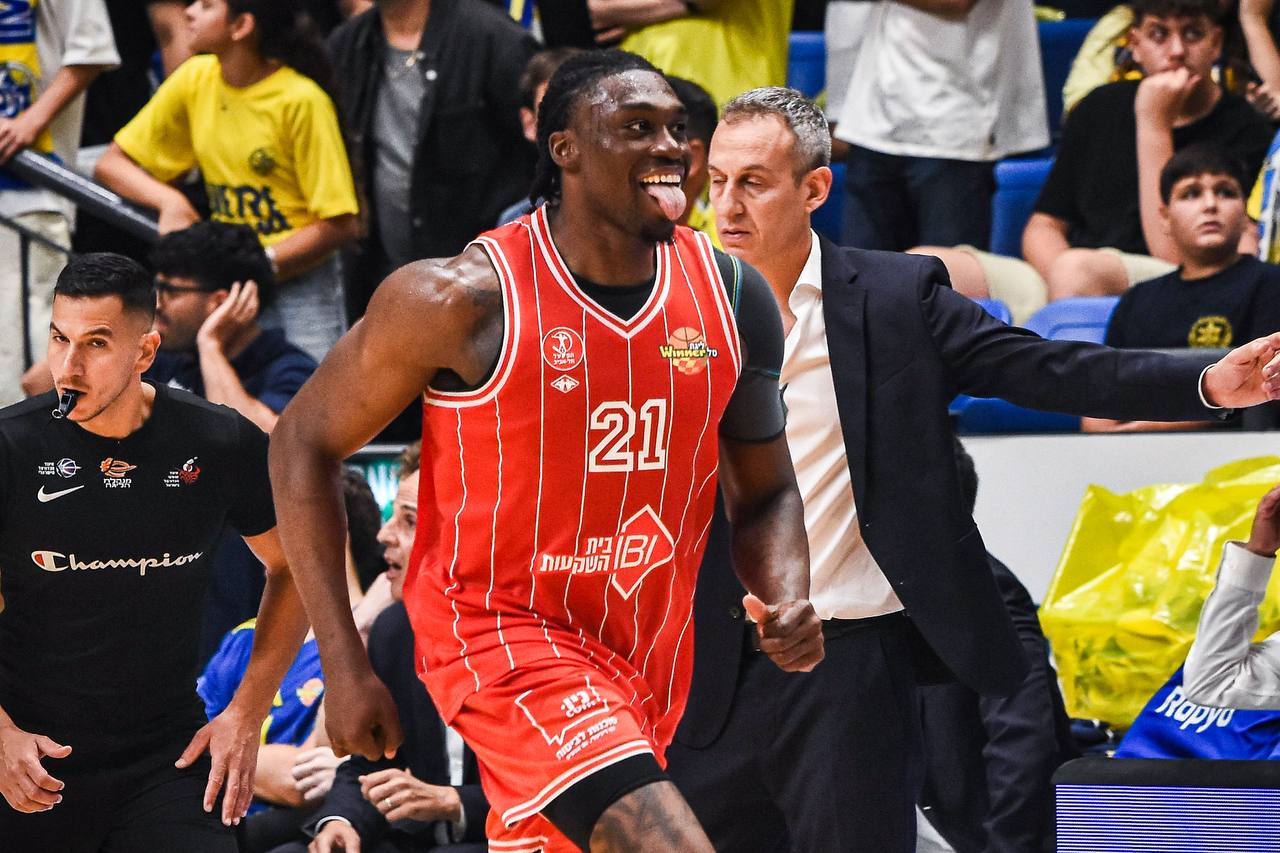
Unlike Caboclo, Tai Odiasie is Oturu’s designated backup and his playing time is directly influenced by the starting center’s performance and foul situation. Nevertheless, comparing his averages from the first three games (12.5 minutes) with those from the last three (13.3 minutes) reveals that while his playing time has remained roughly the same, he has become far more productive.
Tai Odiase – Photo credit: Yehuda Halickman
His scoring average has jumped from 2.6 points to 6.7, while his efficiency rating has climbed from 2.3 to 6. Against Panathinaikos, he contributed important points late in the first half while Oturu was dealing with foul trouble. Itoudis’ ability to time Odiasie’s minutes so that he can make a meaningful contribution of his own, rather than simply provide rest for the starting center, is crucial against the EuroLeague’s strongest teams.
The improvement in Ish Wainright’s game is even more striking. There is no doubt that bringing him on for Oturu with three minutes remaining was Itoudis’ knockout blow against his coaching mentor and former colleague.
The experienced forward has seen his minutes reduced this season following the highly effective addition of Zach LeDay to the roster. Early in the campaign, it also appeared that Itoudis was struggling to find the right way to integrate him into the team.
Across the first three games, Wainright averaged 19.5 minutes but contributed just a 3 efficiency rating and 2.3 points per game. Over the next three games, he actually played three and a half minutes less per contest, yet doubled his contributions in both efficiency rating (6) and scoring (5 points per game).
More importantly, particularly for an unselfish team player like Wainright, his cumulative plus/minus across those two stretches jumped from minus-4 in the first three games to plus-14 in the next three. In other words, he has gone from a player who simply gave others a breather to one who actively helps his team win games.
That was precisely what happened when Itoudis threw him straight into crunch time at OAKA.
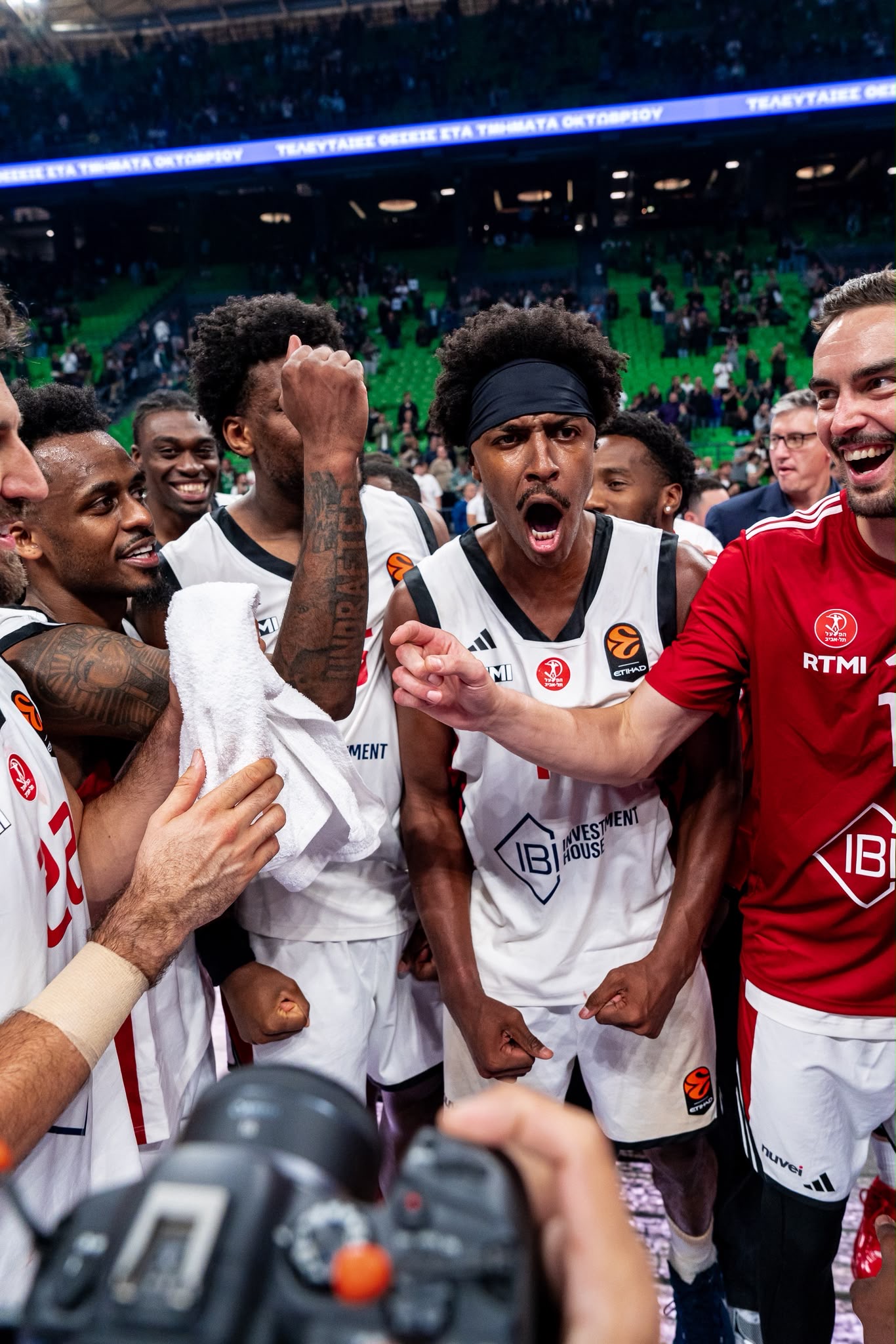
Photo credit: Hapoel Tel Aviv
It began with a post-up possession that Wainright locked down before turning it into an assist for a Bryant three-pointer that gave Hapoel a one-point lead. Next came a handoff that set up Micic’s unbelievable three, followed by a cut into the paint and a dish to LeDay for a dunk.
Three assists from a rotation player to the three stars around him helped bring down the team favored to win the competition.
Itoudis had Odiasie and Caboclo sitting on the bench, but he trusted his instincts and knew that Wainright was the right option against Mattias Lessort and Guerschon Yabusele. That substitution capped a masterclass in game management, one that brought back memories of the season when Hapoel Tel Aviv went all the way in European competition.


0 Comments