


Singing Hatikvah, Israel’s national anthem, is a fairly routine act for me. Every basketball game in Israel begins with it. Add to that the military ceremonies, memorials and Independence Day events and you end up with dozens, if not hundreds of times each year that the words “To be a free people in our land, the land of Zion and Jerusalem” leave my mouth in my usual off-key tone. Honestly, it’s become something of a habit.
But this week, in three different moments, I found myself singing the anthem with teary eyes.
It started during the game against Poland, when loud boos echoed from all around. It doesn’t matter how cynical you are or how critical you might be of the government, there wasn’t a single Israeli in that arena whose heart didn’t sink at that moment. Players, journalists and fans all felt the same emotion and reacted the same way. “We just started screaming the anthem as loud as we could,” as captain Tomer Ginat said immediately after the game.
Among the 200 Israeli fans shouting Hatikvah at the top of their lungs, with voices strained and a mix of insult and rage in their hearts, was a group especially close to mine: a delegation of 14 wounded IDF veterans from Beit Halochem Jerusalem. People who have sacrificed and still sacrifice for the state, some with visible physical injuries and others with invisible psychological wounds.
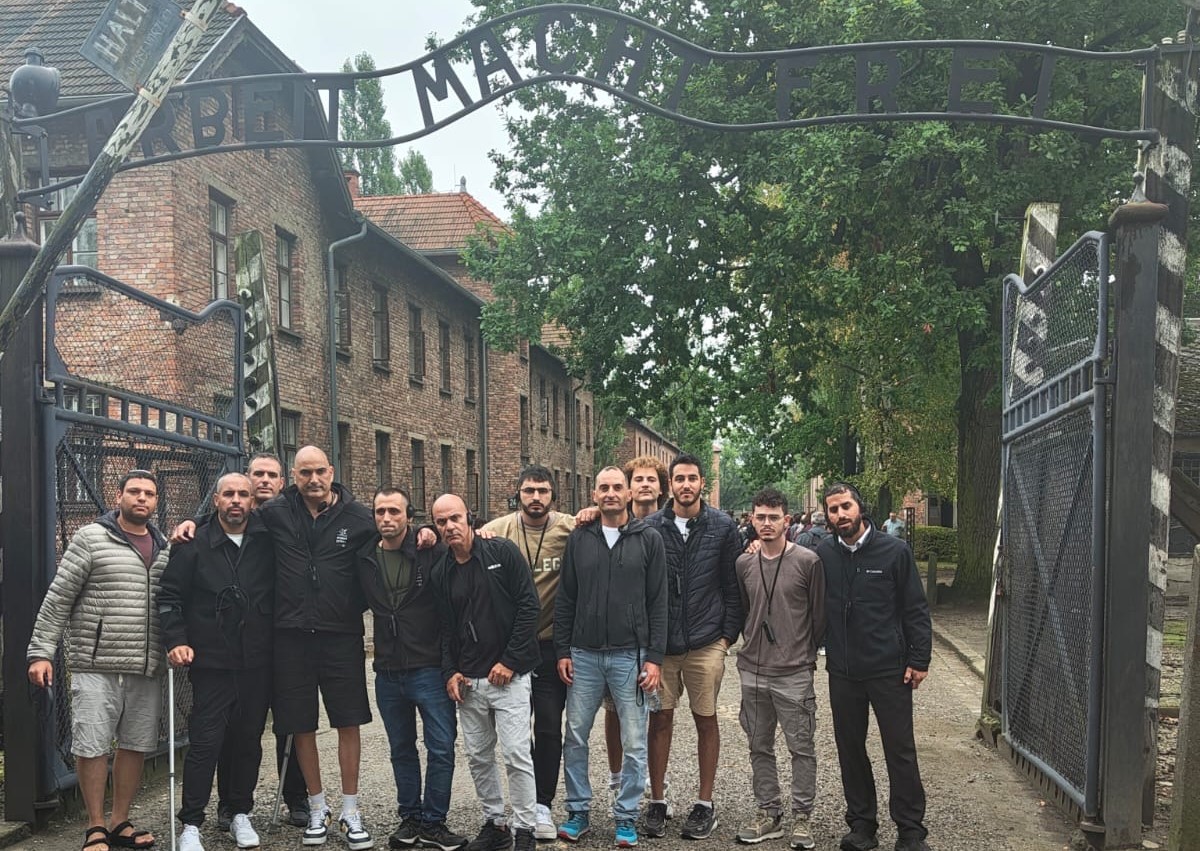
This group, flown in thanks to an initiative by the Israel Basketball Association, which is also covering the cost of the trip, includes people from all parts of Israeli society: religious and secular, right-wing and left-wing, young soldiers wounded in the recent war and older veterans injured in the Second Lebanon War. They all came here with one goal, to support Israel and represent the country with pride.
A few hours after that heartbreaking loss to Poland, the Israeli fans led by members of the delegation sang Hatikvah again. This time it was immediately after Israel’s stunning victory over France. As team captain Tomer Ginat declared live on air, “No one will ever boo the Israeli anthem again,” the fans erupted in an emotional, a cappella rendition of the anthem, voices cracking, eyes wet, closing an unforgettable and moving evening.
Three days later, after Israel had also beaten Belgium to keep its hopes of finishing first in the group alive, I joined the delegation on a tour of Auschwitz-Birkenau.
To be honest, I didn’t really know what to expect. Unlike most Israelis my age, I didn’t go on the traditional high school trip to Poland. There’s something strange about spending a week celebrating basketball and then suddenly shifting the atmosphere so drastically. It’s a kind of contrast that only Israelis seem able to contain, a contrast that, in a way, gives you perspective, but also highlights just how miraculous it is that Israelis are walking around Poland, singing their anthem, cheering for a good basketball team and speaking Hebrew.
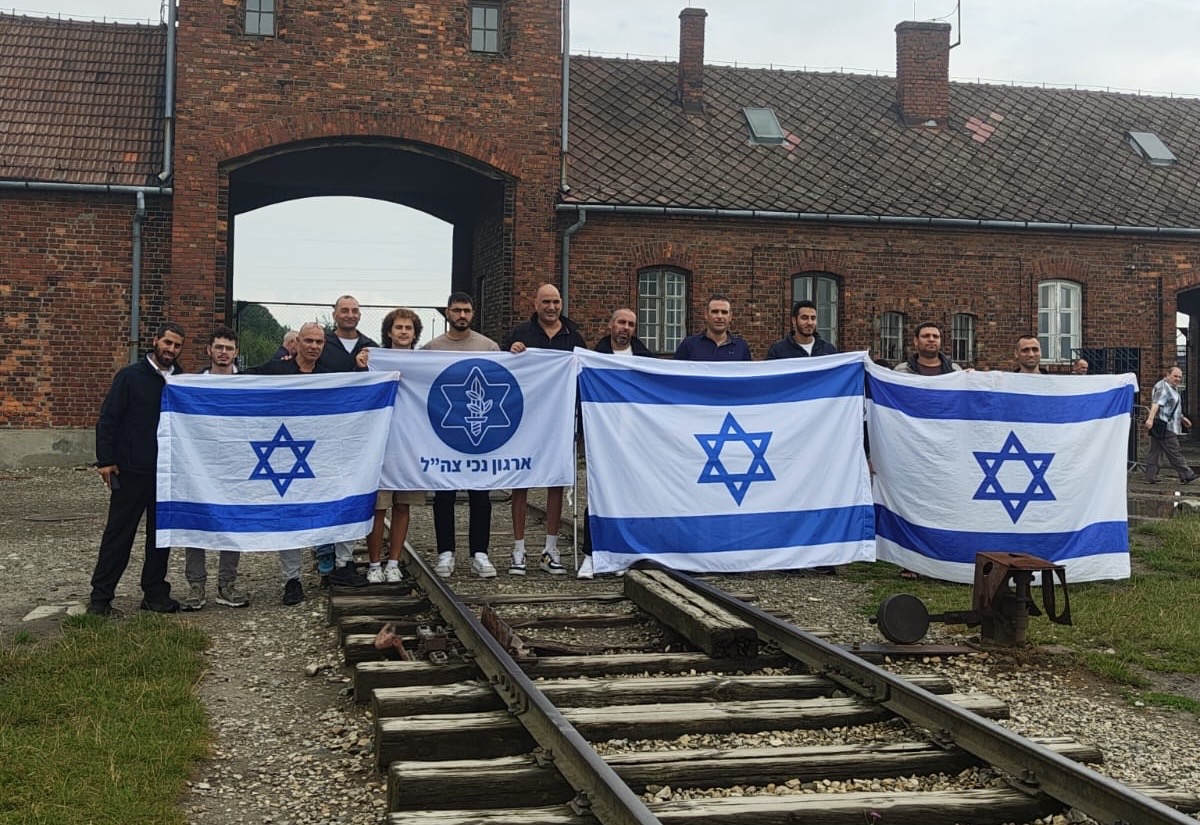
At the start of the tour, our guide Roee Peled-Chanany, one of the most experienced and veteran guides for Israeli groups in Poland, sounded emotional, “Every group is special, but especially these guys, who come here carrying not only the role of representing the country but also their own personal stories. These are people who physically sacrificed for the state, for the Jewish people, so of course, that brings a different perspective and another layer of meaning.”
Yossi Zaken, one of the delegation members and a teammate of mine in wheelchair basketball told me as we walked among the Auschwitz barracks, “The shift from the joy of basketball to the feelings during this tour is like an on-off switch. Yesterday someone hit my ‘on’ button and I was happy, enjoying myself. But the moment I walked through that gate, it was like someone switched me off. No smile. No joy. It’s like Memorial Day and Independence Day together. Only we live this. Only someone who lives this can truly understand what I’m saying.”
One of the most powerful images of the tournament was of Zaken, waving a giant Israeli flag on crutches during the anthem as he explained his feelings when the booing rang out, “I felt like it was a war. I came to fight and in that anthem, I gave my heart for our players, for our soldiers who are in Gaza right now, for our hostages, for everyone. Yes, I’m wounded today and I can’t do much. But can I shout? Can I go wild? Can I raise a giant flag with my crutches and show them that even when we’re broken, we’re strong? Then that’s exactly what I’ll do.”
Yoni Chai, head of the delegation and director of the sports division at Beit Halochem Jerusalem, summed it up, “It was a very emotional day. After everything the guys here have been through, Khan Yunis, various places and wars, they came here and there was a real sense of emotion. Even though it was a hard day, we always see hope and always with light in our eyes.”
הכי מרגש שיש.
משלחת פצועי צה"ל מבית הלוחם ירושלים בתפילה להשבת החטופים על אדמת מחנה ההשמדה בירקנאו@thesportsrabbi pic.twitter.com/ZKuXYfkSHR— Elchanan Hacohen (@elchnanhc) September 3, 2025
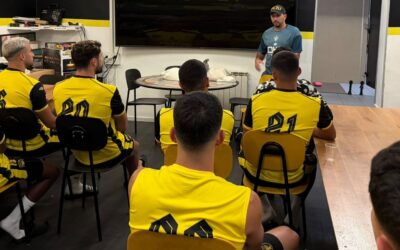
And so, standing near the most horrific place of all, the gas chambers at Birkenau wrapped in Israeli flags, Roee finished the tour. Just before heading off to an emotional meeting with the national team players, delegation member Doron Golan asked to say the Kaddish prayer at the site where more than a million Jews were murdered.
And once again, the entire group sang Hatikvah.
Immediately after, they continued with the words of Acheinu, “Our brothers, the whole house of Israel, who are in distress and captivity, may the Omnipresent have mercy on them and deliver them from distress to relief, from darkness to light, from slavery to redemption, now, swiftly and soon.”
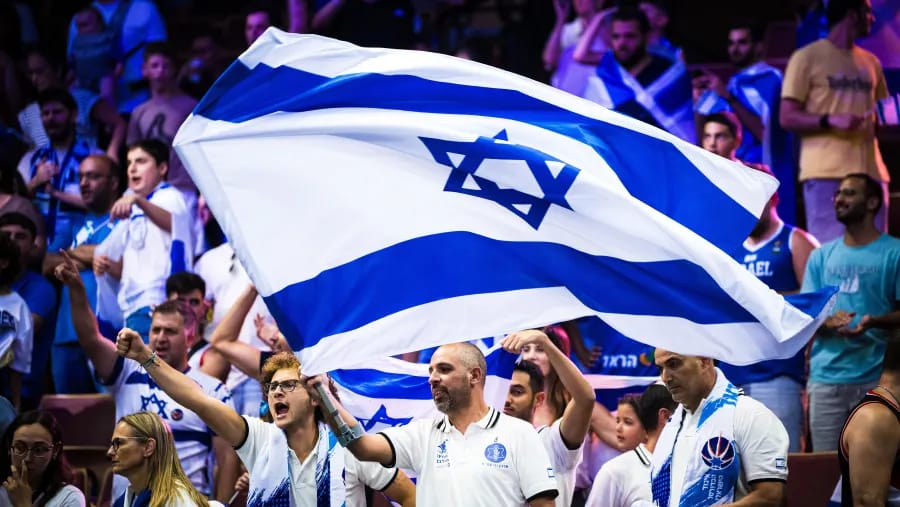
Photo Credit: FIBA
0 Comments