


1. Luka, Lloyd, Giannis, Roman
The scoring leaderboard after the first round of EuroBasket is one worth filing, pinning up, or at least saving:
Luka Dončić – 34 points
Jordan Loyd – 32
Giannis Antetokounmpo – 31
Roman Sorkin – 31
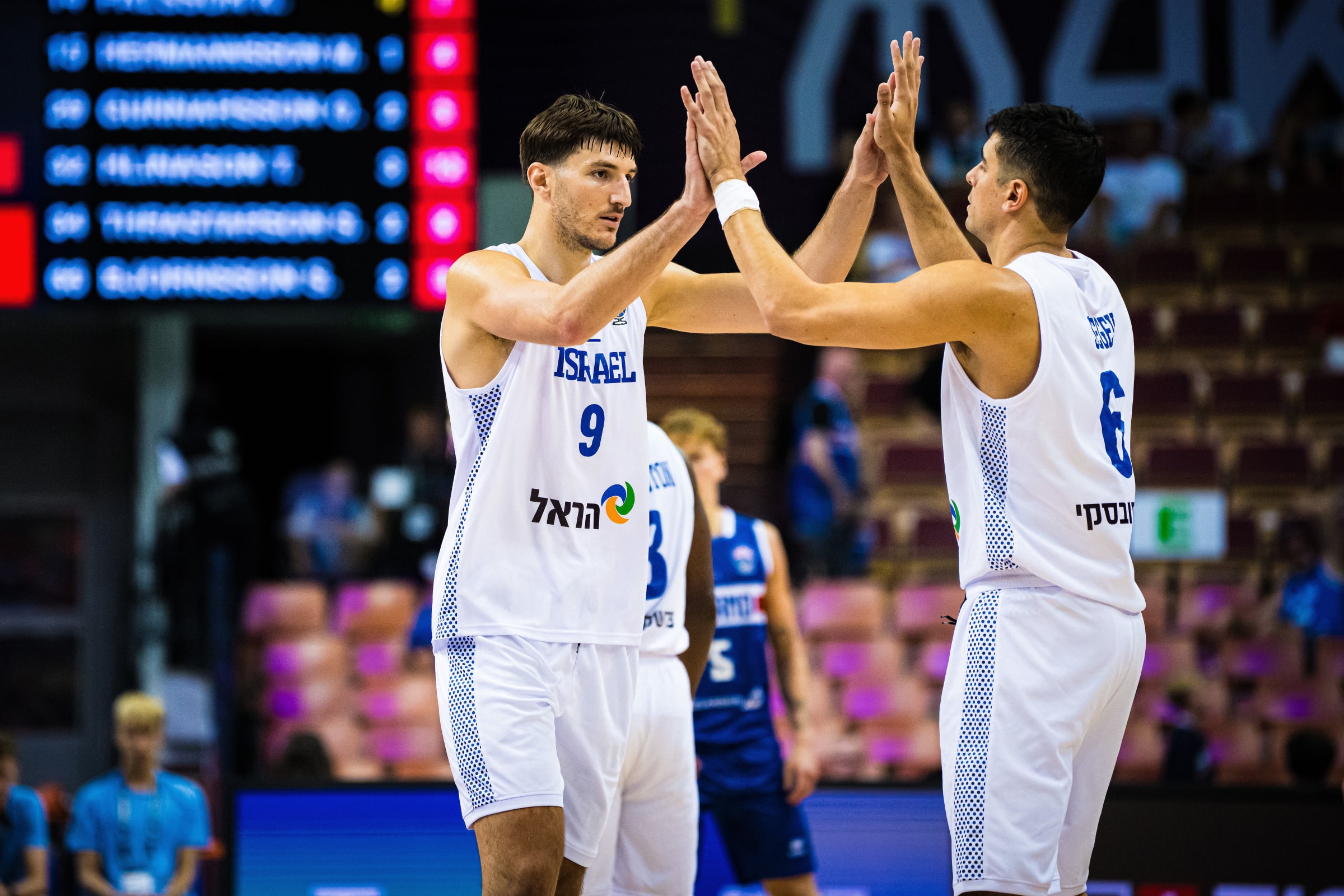
Roman Sorkin – Photo credit: FIBA
Beyond the fact that the Israeli representative is the only one on the list who has never played in the NBA, he was actually the most versatile in the way he earned his points.
Half of Dončić’s total came from the free-throw line and he went just 3/9 from 3-point lane; Loyd caught fire from deep, hitting 7 of 8 from beyond the arc, but only shot 33% on two-pointers; Antetokounmpo didn’t take a single shot from outside.
And Sorkin? Let’s pause for a moment and take a deeper look at the blue-and-white big man.
He went 9/12 from two (75%). Eight of those came from inside the paint and one from mid-range. He shot 4/7 from three (57%). For comparison, the rest of Israel combined for 3/17 from downtown.
He scored 8 points in the first quarter, 2 in the second, 11 in the third and another 10 in the fourth.
Even from a historical perspective, this wasn’t just a personal national-team career high for Sorkin.
Looking up into the stands at the Katowice arena, he probably spotted Lior Eliyahu the last Israeli to score 30+ points in a EuroBasket game back in 2009 (31 against Croatia).

Lior Eliyahu – Photo Credit: FIBA
And when he rejoins Maccabi Tel Aviv’s training later this month, he’ll be reunited with his coach Oded Katash who was the last Israeli to score 30+ in a EuroBasket win (34 against France in 1997).
At the time, Sorkin was a 10-month-old baby.
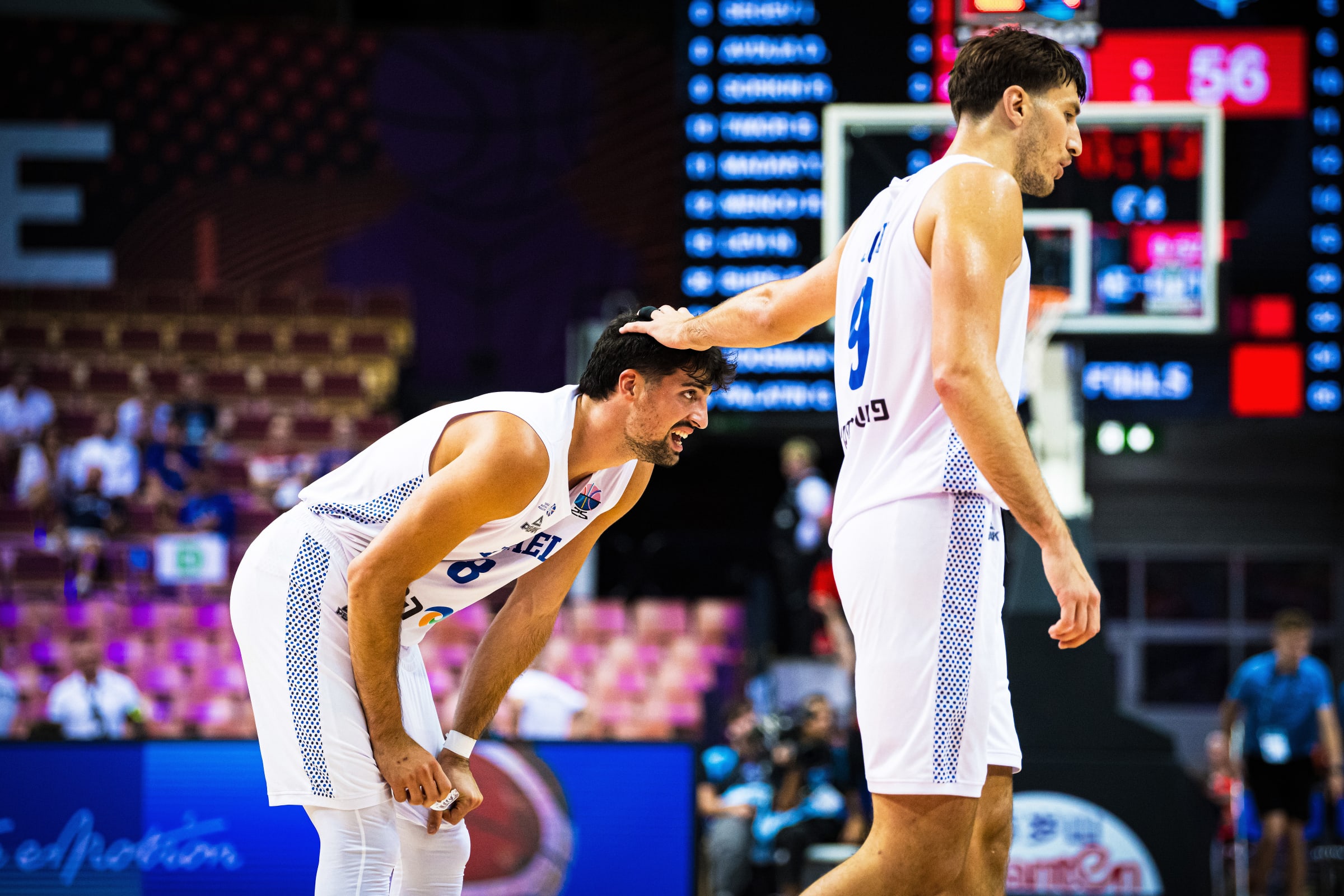
Roma Sorkin and Deni Avdija – Photo credit: FIBA
2. When Avdija’s 3’s Start Falling
Sure, we need to keep things in perspective. It was just Iceland. The level of competition is going to ramp up in the coming days. Things will get tougher.
But still, Israel has stumbled over teams like “Iceland” before in previous EuroBaskets, often barely escaping, or not at all. Think back to Great Britain, who beat the blue-and-white in the 2013 opener.
At the end of the day Sorkin didn’t do it alone.
Avdija controlled the game, showed leadership and scored 20 points of his own, with impressive efficiency: 5/7 from two, 10/12 from the charity stripe.
Just imagine the day when he starts hitting 3’s, instead of going 0/5 like yesterday and you’ll realize how easily he could flirt with 30-point games.
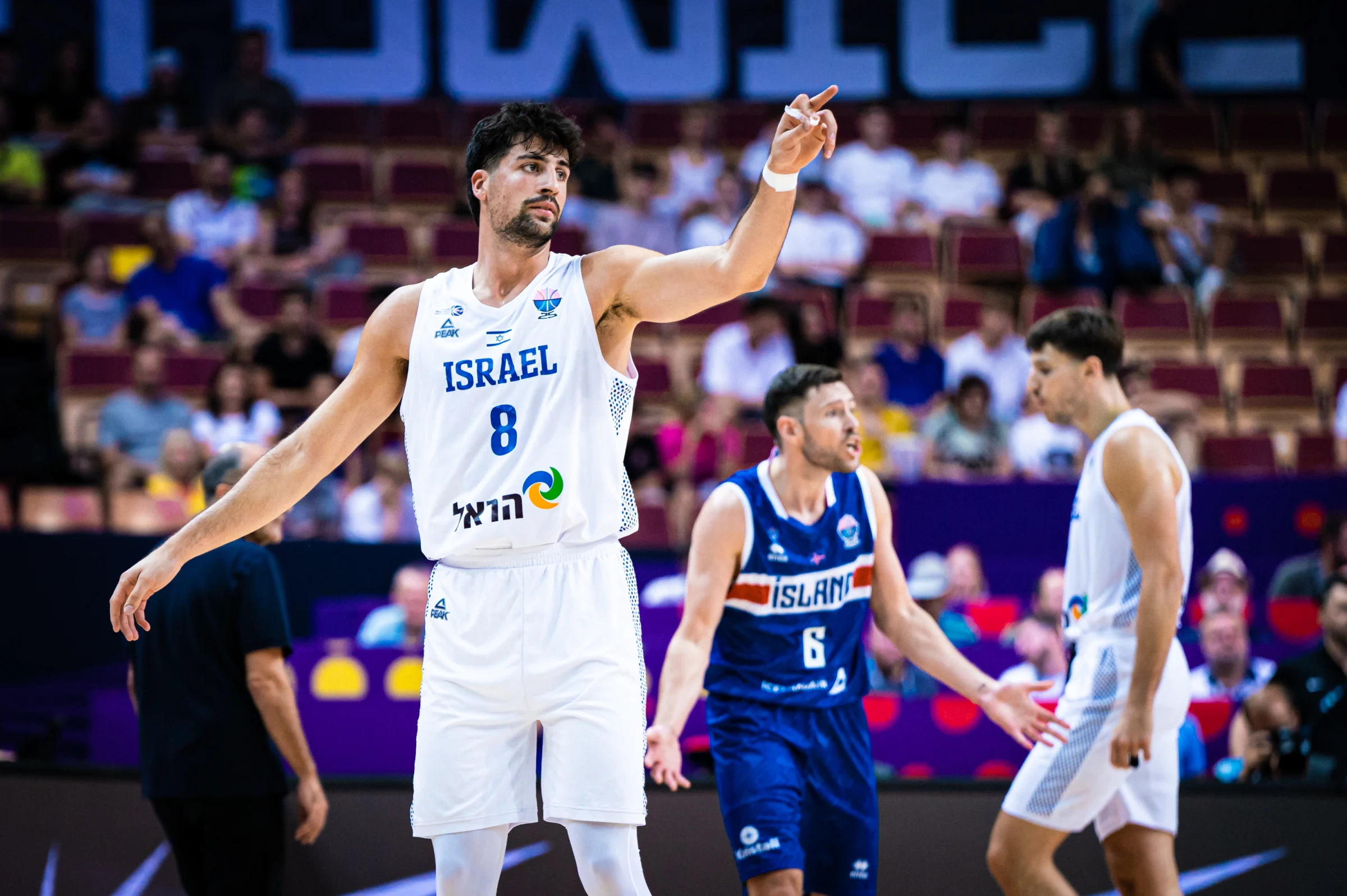
That is, if it happens. Given he’s just 2/31 from deep since joining the national team this summer so nothing is guaranteed.
Still, the Avdija–Sorkin duo combined for 51 points.
The good news: only one pair in Europe scored more in the past two days (55).
The bad news: that same duo of Loyd and Mateusz Ponitka is who Israel will face on Saturday night.

Ariel Beit Halachmi – Photo credit: FIBA
3. There’s always got to be two
The challenge for coach Ariel Beit-Halahmy lies in his team’s depth.
His starting five was the strongest unit as they were the ones responsible for the brief but decisive third-quarter surge: a 15-2 run in three minutes, flipping a tight 36-32 halftime lead into a comfortable 51-34 advantage.
But the gap between the starters and the so-called second unit is vast. Too vast.
This can be seen clearly in the players’ plus-minus stats:
+23 for Avdija, +18 for Yam Madar, +14 for Tomer Ginat (who added 6 rebounds and 6 assists), and +12 each for Sorkin and Yovel Zoosman.
And the bench?
Guy Palatin managed a respectable +8 somehow, but the rest, from Itay Segev’s +3 (at best) to Khadeen Carrington’s dismal -13, week they weren’t even close.
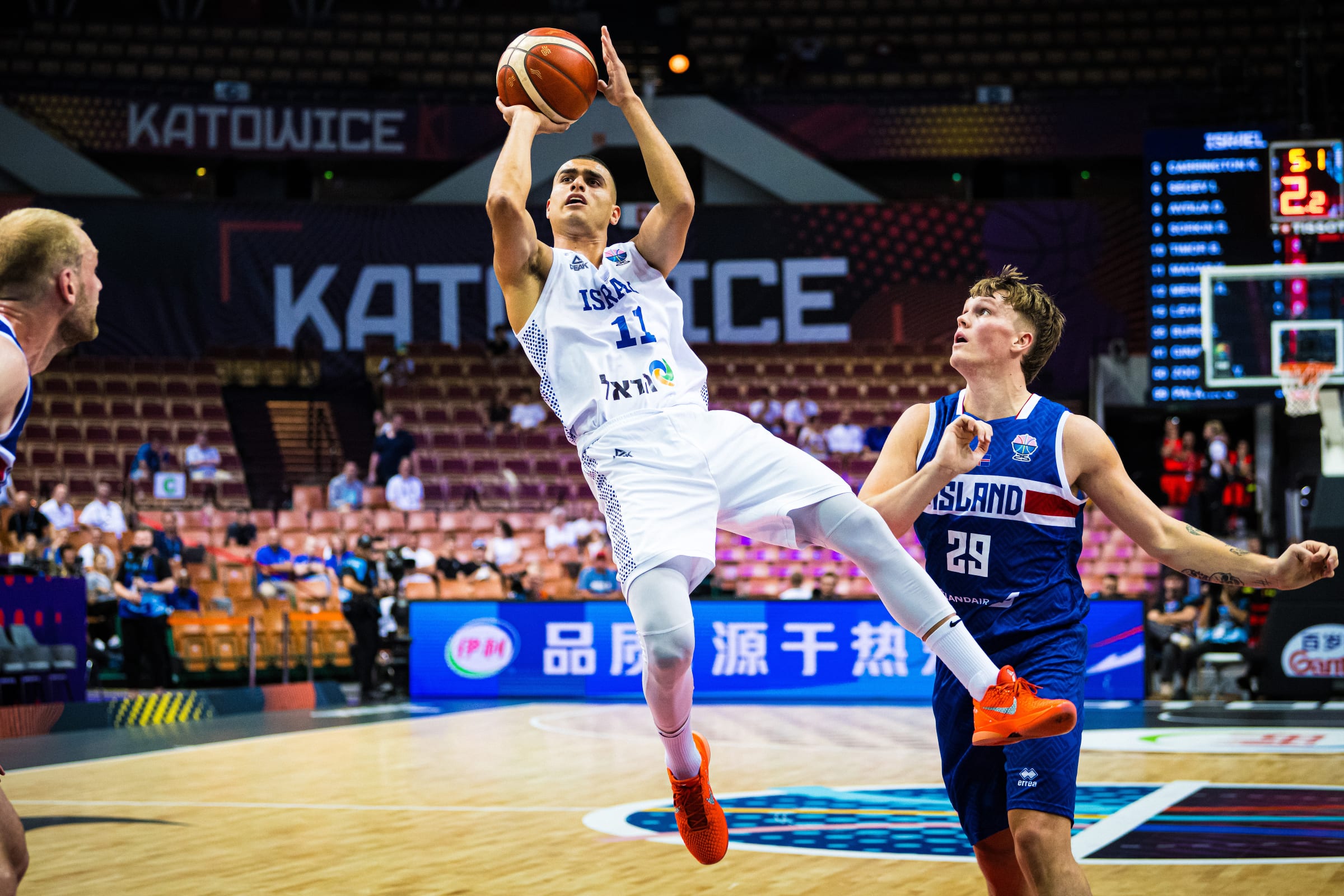
Yam Madar – Photo credit: FIBA
The not-so-surprising over-reliance on Madar, the only true point guard on the roster, was clear to see.
In the first half, Israel outscored Iceland 25-16 with him on the floor.
When he rested, they were outscored 16-11.
And beyond questions about how Beit-Halachmi chose to build this roster, it was hard to understand some of his lineup decisions.
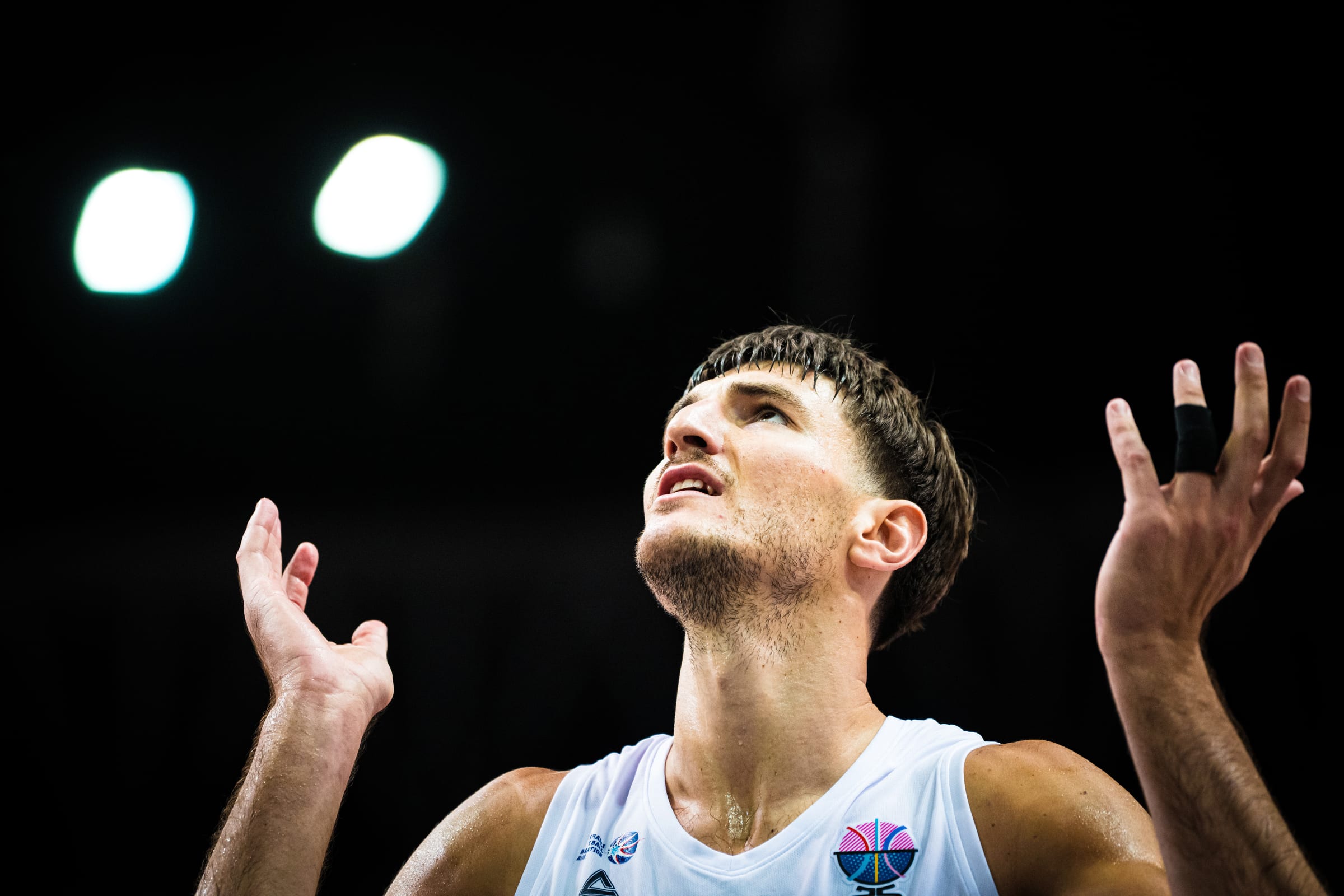
Roman Sorkin – Photo credit: FIBA
Yes, it makes sense to want all your big guns on the floor to start.
But given the shallow bench especially in terms of scoring the rotation needs a rethink.
He must ensure at least two scorers are on the court at all times.
In other words, always have at least two of the three, Madar, Avdija, Sorkin playing.

0 Comments